How Venue Lighting Variations Alter Player Visibility Patterns and Live Point Spread Movements in Night Basketball Games
Drew Keller · Oct 5, 2026
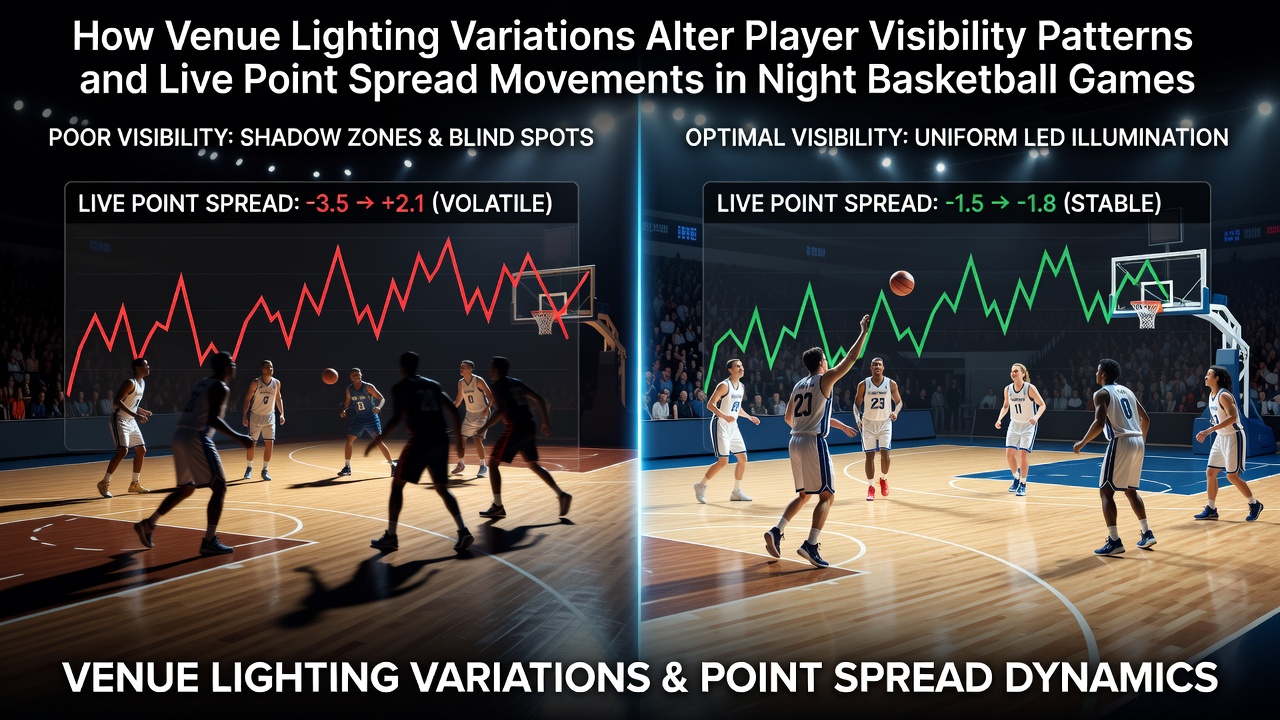
How Venue Lighting Variations Alter Player Visibility Patterns and Live Point Spread Movements in Night Basketball Games
Venue lighting in professional and collegiate basketball arenas shows measurable differences across facilities, and these variations influence how players perceive the court during night games. Researchers at sports performance labs have documented that overhead fixtures, side lighting arrays, and LED upgrades create distinct brightness levels and shadow patterns that affect reaction times and shot selection. Data from multiple seasons indicates that teams playing under older sodium vapor systems often record lower field goal percentages in the first quarter compared to those under uniform LED setups, while live point spreads adjust rapidly once scoring trends emerge.
Arena Lighting Configurations and Visibility Metrics
Standards set by governing bodies require minimum lux levels on the playing surface, yet actual installations differ because arenas built in different decades use incompatible technologies. Observers note that facilities with mixed lighting sources produce glare spots near the three-point line and darker zones under the basket, and these conditions force players to adjust their visual focus repeatedly throughout a possession. Studies from the Sport Canada research division tracked eye-tracking data during night contests and found that athletes require up to 1.8 seconds longer to locate open teammates when transitioning from brightly lit perimeter areas into shadowed paint regions.
League schedules place many games under artificial lights after sunset, and the cumulative effect of these lighting inconsistencies appears in box-score aggregates. Teams competing in venues with recent LED retrofits show improved three-point accuracy after the opening ten minutes, whereas squads in older buildings experience elevated turnover rates linked to misread passes. Live betting markets respond to these early patterns because oddsmakers monitor real-time shooting percentages and adjust spreads accordingly.
Performance Data and Market Reactions
Statistical reviews of night games across major conferences reveal correlations between lighting quality reports and efficiency ratings. When arena operators publish pre-game lighting audits, analysts compare those figures against historical shooting splits, and the resulting models help explain why certain road teams outperform expectations in specific buildings. Point spreads in live markets shift within the first six minutes of play when visibility constraints suppress one side’s offensive output, and bookmakers widen or narrow lines based on the emerging data stream.
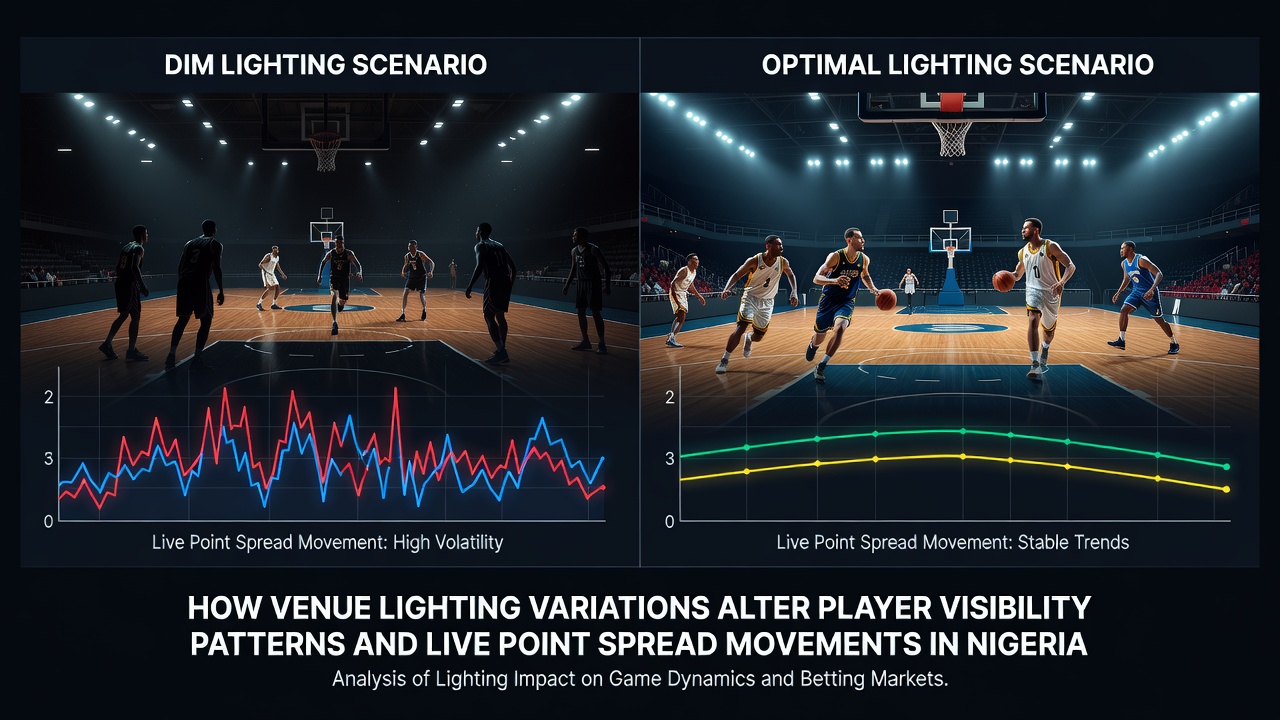
October 2026 marks the start of a season where several mid-major programs completed lighting upgrades funded through facility grants, and early season tracking shows corresponding changes in both player statistics and wagering volumes. Data sets compiled by university athletics departments indicate that improved uniformity reduces the number of contested shots missed due to visual interference, while spreads move less dramatically once teams adapt to consistent illumination. Those who monitor injury reports alongside lighting specifications often identify additional variables because fatigued players exhibit greater sensitivity to glare during the fourth quarter.
Case Examples from Recent Seasons
One documented instance involved a conference tournament game played under temporary lighting after a power fluctuation, and the affected team posted a season-low assist total while committing eight more turnovers than its average. Market observers recorded rapid point-spread movement as bettors reacted to the visible execution drop-off. Another example from a nationally televised night contest demonstrated how side-court LED panels created reflective glare on polished hardwood, prompting coaches to adjust offensive sets away from baseline cuts. Researchers later correlated the altered play-calling with a measurable dip in effective field goal percentage that influenced in-game line adjustments.
Equipment suppliers continue to refine fixture placement and diffusion techniques, and reports from facility managers indicate that newer systems reduce hot spots by approximately 22 percent compared with legacy installations. These technical improvements feed into broader performance databases that sports analytics firms use to refine predictive models for live wagering. Because visibility constraints vary by arena rather than by team, the patterns repeat across multiple seasons and provide consistent inputs for market analysis.
Conclusion
Venue lighting differences produce observable effects on player visibility and subsequent game statistics during night basketball contests, and those effects translate directly into adjustments within live point-spread markets. Continued upgrades and standardized measurement protocols supply additional data points each season, allowing performance tracking to incorporate lighting variables alongside traditional metrics such as pace and defensive efficiency.