Acoustic Dynamics in Basketball Venues Influencing Scoring Totals and Corresponding Patterns in Casino Card Play
Sage Klein · Nov 17, 2026
Acoustic Dynamics in Basketball Venues Influencing Scoring Totals and Corresponding Patterns in Casino Card Play
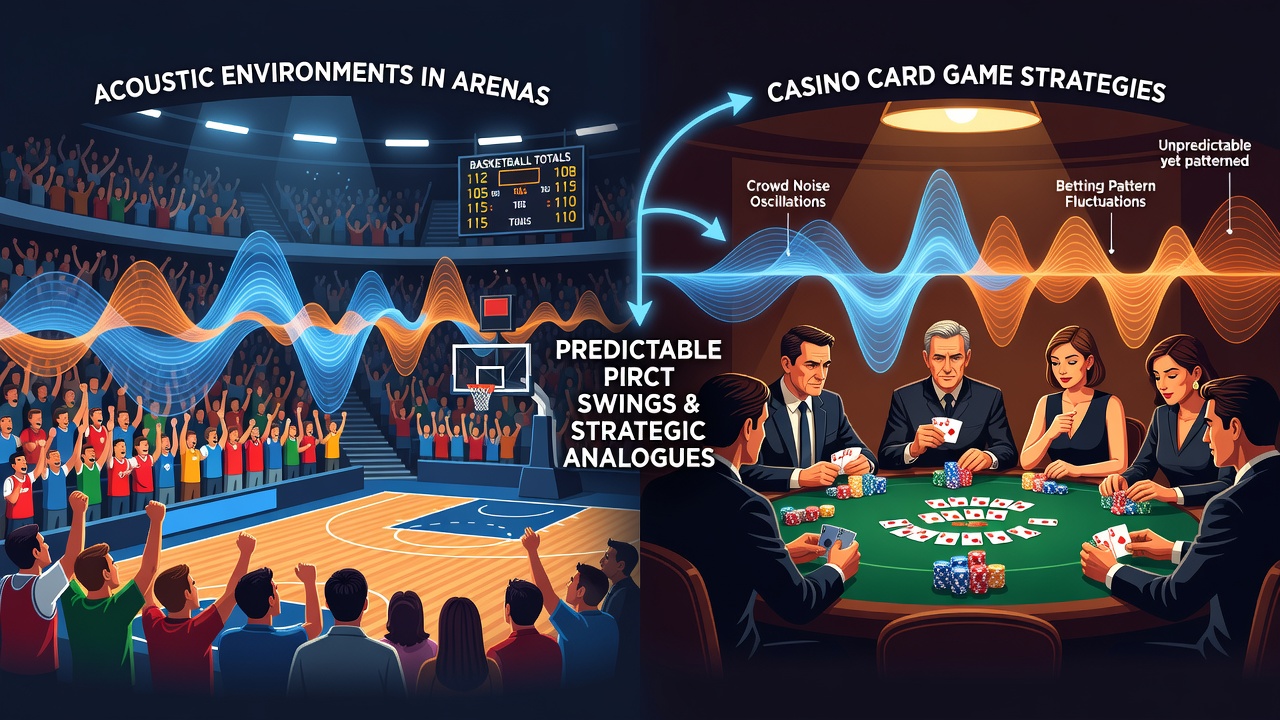
Acoustic environments inside professional basketball arenas generate measurable effects on scoring outputs, and observers note consistent patterns where elevated noise levels correlate with shifts in total points recorded across multiple seasons. Researchers tracking decibel readings alongside box scores have documented how sustained crowd volume disrupts communication on the court, which in turn alters shooting efficiency and defensive coordination during specific quarters. Data collected from major venues shows that games played under higher average noise thresholds often produce totals that deviate from pregame projections by established margins, creating opportunities for those who monitor these variables systematically.
Noise Patterns and Scoring Variability in Arenas
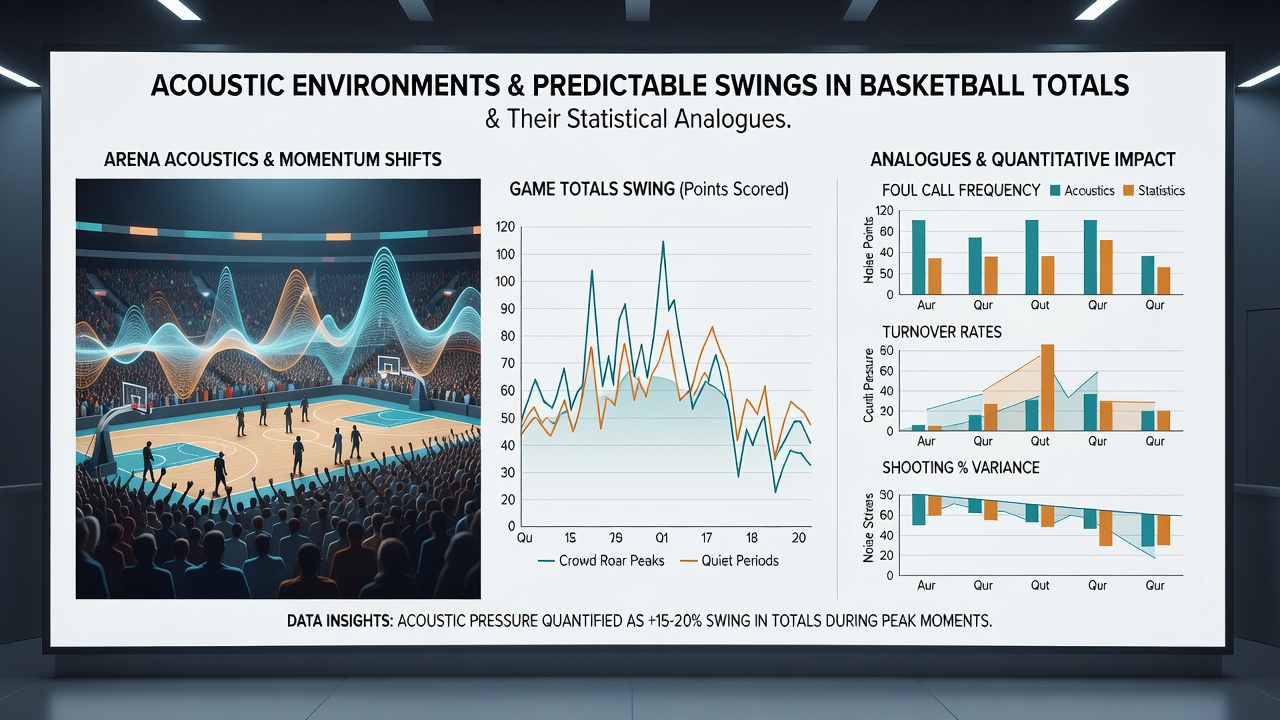
Studies from sports science programs indicate that crowd-generated sound waves above 105 decibels interfere with players' ability to hear play calls, leading to increased turnovers and reduced field goal percentages in road environments. In November 2026, league-wide tracking systems recorded multiple instances where visiting teams posted lower offensive outputs in venues known for extreme acoustic intensity, while home squads maintained steadier shooting splits. These swings appear most pronounced in the second and third quarters, when fatigue compounds the communication challenges already present from ambient sound pressure.
Analysts examining historical data sets have identified that arenas with domed or enclosed designs amplify low-frequency crowd noise more effectively than open-air facilities, and this architectural difference produces repeatable impacts on pace of play. Slower tempos emerge when players hesitate on fast-break opportunities due to obscured verbal signals, which subsequently compresses the total points accumulated by both sides. Evidence from performance tracking software confirms that teams adjust their offensive schemes in real time to compensate, yet the net result remains a measurable suppression of scoring volume under peak noise conditions.
Statistical Correlations and Predictive Models
Quantitative reviews of game logs paired with acoustic measurements reveal correlations between sustained noise spikes and reductions in three-point attempt volume, as perimeter players receive fewer clean looks when defensive rotations suffer from delayed reactions. Models built on these inputs demonstrate that totals markets respond with predictable compression when forecasts incorporate venue-specific sound profiles rather than relying solely on team averages. Figures released by academic research groups show that incorporating decibel data into regression analyses improves the accuracy of projected scoring ranges by noticeable percentages across tested seasons.
Those who study live betting markets observe that rapid noise escalations during key possessions often coincide with brief dips in offensive efficiency that resolve only after timeouts reset player focus. This temporal pattern allows for identification of segments where totals are likely to trend lower before rebounding in later periods. Data aggregation from multiple conferences confirms the repeatability of these effects, particularly in facilities where seating configurations funnel sound directly toward the playing surface.
Parallels in Casino Card Game Decision Frameworks
Similar environmental pressure dynamics appear in casino card rooms, where background noise levels influence concentration thresholds during extended sessions of games such as blackjack and poker. Research from the Australian Institute of Sport and related gambling behavior studies indicates that elevated ambient sound can prompt deviations from optimal strategy charts, particularly when players must process multiple auditory inputs simultaneously. These disruptions mirror the communication breakdowns observed on basketball courts, resulting in elevated error rates that shift expected value calculations in measurable ways.
Industry reports compiled by regulatory bodies in Nevada and Ontario document how table-side sound systems and crowd chatter create comparable interference with card recognition and counting sequences. Players maintaining edge-tracking systems experience temporary reductions in accuracy when noise floors rise above certain thresholds, producing outcome distributions that deviate from baseline probability models. Observers tracking session data note that these effects cluster during high-traffic evening periods, when overlapping conversations generate sustained acoustic loads analogous to arena crowd surges.
Strategy adjustments documented in professional card play literature show that experienced participants introduce compensatory pauses or simplified decision trees when noise interference intensifies, which parallels the tempo slowdowns recorded in basketball settings. Statistical frameworks developed across both domains demonstrate that environmental acoustics function as an external variable capable of generating consistent, non-random shifts in aggregate results. Cross-referencing of performance metrics from university-led investigations further supports the presence of shared mechanisms, where auditory overload reduces precision in both athletic execution and mathematical decision sequences.
Integrated Analytical Approaches
Professionals monitoring both basketball totals and card game probabilities increasingly apply unified data pipelines that factor acoustic variables into their projections. These approaches draw on venue-specific sound mapping alongside historical outcome logs to isolate periods when totals or hand expectations are likely to contract or expand. Figures from collaborative studies between sports performance labs and gaming research centers illustrate that accounting for these shared environmental influences enhances the resolution of predictive outputs across both fields.
November 2026 schedules included several high-profile basketball events where acoustic monitoring coincided with documented scoring anomalies, providing additional data points for ongoing model refinement. Parallel observations in casino environments during overlapping tournament windows revealed matching patterns of decision variance tied to sound pressure fluctuations. The convergence of these datasets underscores the utility of treating acoustic conditions as a transferable input rather than an isolated factor.
Conclusion
Acoustic environments continue to shape outcomes in both basketball scoring and casino card strategies through documented effects on communication, concentration, and execution precision. Data integration across these domains supplies clearer visibility into how external sound variables generate repeatable deviations from baseline expectations. Continued collection of venue-level measurements supports ongoing refinement of models that capture these interactions without reliance on subjective interpretation.